What a Weekly Pool Visit Actually Checks
From the kitchen window a weekly pool visit looks simple, but each step catches a different kind of problem early.
October 17, 2026 · 4 min read
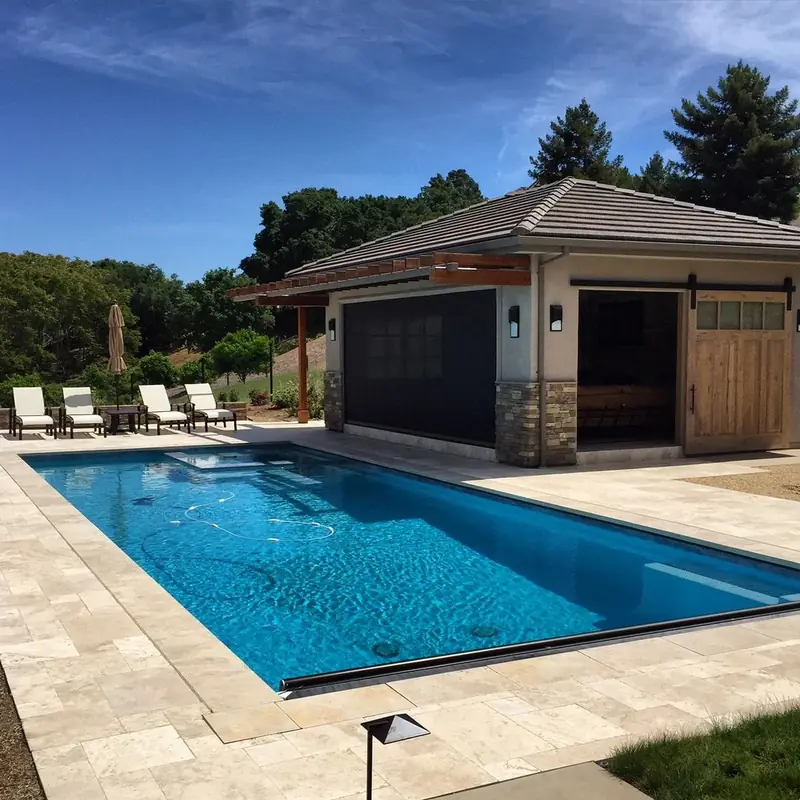
A weekly pool visit looks simple from the kitchen window. Someone shows up, spends a little while at the pool, and leaves. What you can't see from inside is the sequence behind it: a water test, a pass through the baskets, a look at the equipment, and a check of the timers. Each step exists because it catches a particular kind of problem early, while it's still cheap to fix. Here is what Davis Pool Service checks on a weekly visit in Prosper, Celina and Frisco, and why each piece matters to the person who owns the pool.
The water test
Every visit starts with testing the water for chlorine, pH, alkalinity and cyanuric acid, plus salt if your pool has a salt system. These numbers move constantly. Sun, rain, swimmers, leaves and a hot Texas week all push them around, so a reading from last Tuesday tells you very little about this Tuesday.
Chlorine is the sanitizer. Too little and the water can turn green or cloudy as algae and bacteria get a foothold. pH affects how well that chlorine works and how the water feels on skin and eyes. When it drifts high, chlorine gets weaker and scale becomes more likely. When it drifts low, the water gets corrosive and can be hard on metal parts and plaster.
Alkalinity acts like a buffer for pH. If it's off, pH tends to bounce around no matter how often you correct it. Cyanuric acid, sometimes called stabilizer, shields chlorine from sunlight. Too little and the sun burns chlorine off quickly. Too much and chlorine becomes sluggish. Commonly cited general ranges are a pH around 7.2 to 7.8 and free chlorine of a few parts per million, but the right targets depend on your pool and equipment, so have your own water tested rather than treating any list as a rule.
Salt matters only if you have a salt system, where the cell makes chlorine from dissolved salt. Too little salt and the cell can't produce enough. Testing it each week catches the slow drift that comes from rain and splash-out.
Baskets and sweep bags
Next come the debris baskets and the sweep bags. The skimmer basket and the pump basket protect your equipment from leaves, bugs and whatever the wind brought over the fence. A full basket restricts flow, and restricted flow makes the pump work harder while the water circulates less. During a heavy leaf week, a basket can fill faster than you'd expect, which is one reason a weekly stop beats a monthly one.
Equipment, leaks and timers
On each visit the equipment is activated and checked for proper operation and for leaks. That means listening for a pump that sounds different, looking for drips at unions and fittings, and noticing a pressure reading that has crept up. Most equipment trouble announces itself in small ways first: a wet patch on the pad, a bit more noise, a heater that takes longer than it used to. Catching it during a routine visit often means a simple repair instead of an emergency.
Timers get checked for accuracy too. Power blips, a daylight saving change or a tripped breaker can leave a clock off by hours. A pump that runs at the wrong time, or not long enough, quietly starves the pool of circulation and filtration, and you won't notice until the water clouds up.
Chemicals & Baskets or Full Service
Davis Pool Service offers two levels of weekly service. Chemicals & Baskets covers everything described above: testing, treating the water for sanitation and pH control, emptying the debris baskets and sweep bags, checking equipment for operation and leaks, and checking timers. Full Service includes all of that and adds more hands-on cleaning:
- Removing debris from the top and bottom of the pool
- Brushing as needed
- Vacuuming or using a leaf master as needed
Which one fits depends on how much debris your yard sends into the water and how much of the cleaning you'd rather hand off.
What to expect from the schedule
A few practical details are worth knowing up front. The service limit is 40 minutes per week, and the water level needs to be at least half-way up the tile line so the skimmer and equipment can work. All basic chemicals are included, while algaecides, phosphate removers, shock, calcium hardness, stabilizers and salt are invoiced separately if they're needed. Weekly service does not remove calcium or lime scale, which is handled as a separate tile cleaning service. Davis Pool Service runs on a 48-week schedule and is closed the week of Thanksgiving and the week of Christmas, so it helps to plan ahead for those two weeks.
If you want the full breakdown of what each level includes, the weekly service page lays it out, and the contact page is the place to ask about your specific pool.
Davis Pool Service, 214.305.4136
Call 214.305.4136More articles
Why Calcium Scale Builds Up on Pool Tile
That white crust along the waterline is not just cosmetic, and it rarely goes away on its own.
Repair or Upgrade? Thinking Through an Aging Pool Pump, Heater or Filter
Not every tired pump needs replacing, and not every repair is worth making.