Why Calcium Scale Builds Up on Pool Tile
That white crust along the waterline is not just cosmetic, and it rarely goes away on its own.
October 17, 2026 · 3 min read
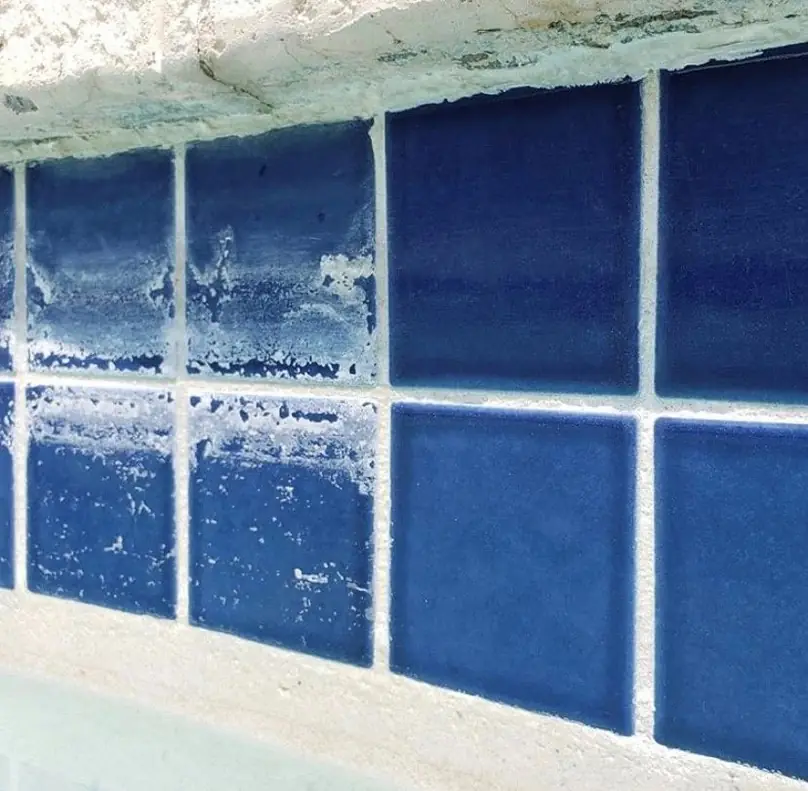
Look along the waterline of almost any pool that's a few years old and you'll find it: a pale, crusty band right where the water meets the tile. It starts as a faint haze and slowly turns into a rough, stubborn layer that a regular tile brush barely touches. That band is calcium scale, and it's one of the most common cosmetic complaints pool owners bring up. It can also be more than cosmetic.
Why scale forms at the waterline
Pool water always carries dissolved minerals, including calcium. When water evaporates, the water leaves and the minerals stay behind. The waterline is where this happens over and over: a thin film of water clings to the tile, dries in the sun and wind, and leaves a tiny deposit. Each cycle adds a little more. Over weeks and months those deposits harden into a visible line.
Several things speed it up. Water chemistry that runs high in pH or calcium hardness makes minerals more likely to come out of solution. Warm water and long, hot summers increase evaporation. Splash zones, spa overflow and areas near water features can also build up faster than the rest of the pool. A pool can have perfectly clear, comfortable water and still grow scale at the tile line, which is why owners are often surprised by it.
What it does to the tile
At first scale just looks dingy. Left alone, it can do real damage. Davis Pool Service describes scale as something that can etch the tile surface, making the tile look dull and faded earlier than it should. Once the surface is etched, new deposits grip even harder, and the tile gets harder to clean each year. Their view is that regular cleaning can prolong the life of your tile and help you avoid expensive tile repair and replacement down the road.
Scale also makes a pool look older than it is. A bright, even tile line frames the water the way a clean baseboard frames a room. When that line is crusty and gray, the whole pool reads as neglected, even if everything else is in good shape.
Why brushing and weekly service don't fix it
Calcium scale is hard mineral, not dirt. Scrubbing at it with a stiff brush can scratch the surface without lifting the deposit, and acid-based home remedies can be rough on grout and surrounding materials. For that reason weekly pool service does not remove calcium or lime scale from tile, stone or any other surface of the pool. At Davis Pool Service, tile cleaning is a separate job with its own process.
How a soft abrasive mineral cleaning works
Davis Pool Service cleans pool tile using an environmentally friendly soft abrasive mineral that's safe for all types of pool tile, with no toxic or harsh chemicals in the process. The job follows five steps:
- Remove enough water to expose the tile line.
- Clean the tile with top of the line equipment, done by owner Glenn Davis.
- Apply a protective tile sealant and begin refilling the pool.
- Vacuum the pool to remove most of the media debris, using a separate vacuum collection tank so the debris doesn't end up in your filter.
- Expect the pool to stay cloudy for a while, run extra filtration, and monitor the pump run times.
That last step surprises people, so it's worth being clear about it. After the cleaning, the water will be cloudy because fine particles remain suspended. That's normal for this kind of work, and the answer is extra filtration, not alarm. Keep an eye on your run times and let the filter do its job.
A cleaning typically ranges from 4-6 hours. Larger pools, or tile with excessive buildup, take longer, so a heavily scaled pool shouldn't be booked into a short window. Davis Pool Service can also clean some fountains, infinity walls and other water features, which is worth asking about if scale has shown up on those.
Keeping it from coming back
Scale tends to return, but how fast depends on your chemistry and how much water evaporates. Keeping the water balanced helps, and having it tested each week is one of the more useful things a routine service visit does. The tile cleaning page explains the process in more detail, and the contact page is the way to ask about your own pool's tile line.
Davis Pool Service, 214.305.4136
Call 214.305.4136More articles
What a Weekly Pool Visit Actually Checks
From the kitchen window a weekly pool visit looks simple, but each step catches a different kind of problem early.
Repair or Upgrade? Thinking Through an Aging Pool Pump, Heater or Filter
Not every tired pump needs replacing, and not every repair is worth making.