Pool Filter Cartridges: Why They Clog and When They're Due
The filter does the quiet work of keeping water clear, and it can only do that while the cartridge can still pass water.
October 17, 2026 · 4 min read
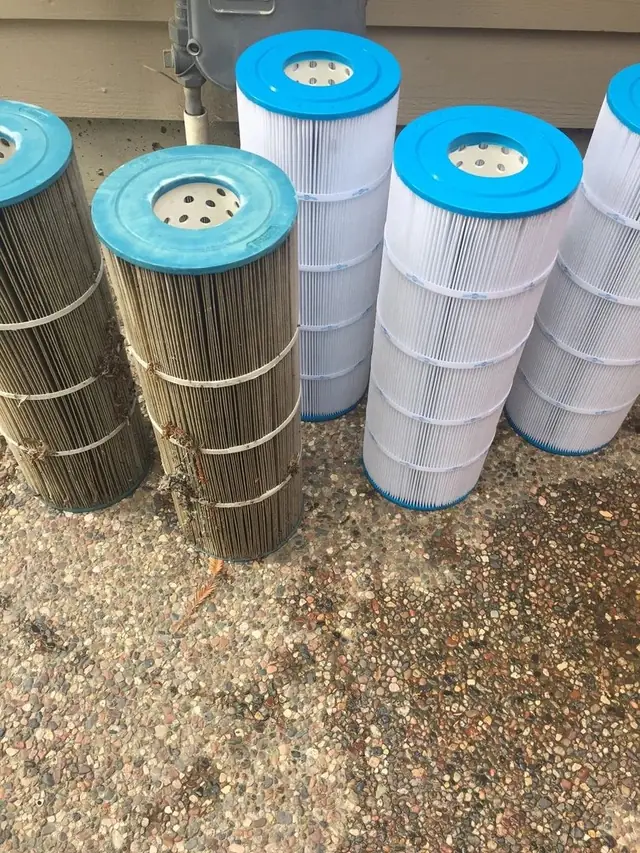
If the pump is the heart of a pool, the filter is the kidney. It pulls out the fine material that chlorine can't deal with on its own: pollen, dust, oils, tiny bits of leaf, and the dead algae that chemicals have already handled. A cartridge filter does this with a pleated element that traps particles while water passes through. That works well until the pleats fill up, and then the whole system starts to struggle.
Why cartridges clog
Every particle the cartridge catches stays in the pleats. Over days and weeks, the surface area available for water to pass through shrinks. Spring pollen, summer sunscreen and body oils, fall leaves and a windy week can all load a cartridge faster than usual. Hard water minerals and scale can also cling to the element, and oils can form a film that ordinary rinsing doesn't remove.
A clogged cartridge doesn't fail suddenly. It gets a little worse each week, which is why many owners don't notice until the water is already cloudy.
Pool owners sometimes assume a clear-looking pool means a clean filter. It's closer to the opposite. A pool that stays clear through a leafy week is often clear because the filter is catching everything, and the cartridge is paying for it. The better the filtration, the faster the element loads up, so a spotless pool is no reason to skip the cartridge.
What a clogged filter does to the pool
When water can't pass through the cartridge easily, flow drops. Less flow means less circulation, so chemicals spread unevenly and the skimmer pulls less debris. The pump also has to push against more resistance, which strains it and can raise the electric bill. Meanwhile the pool gets less filtration just when it needs more, so water that tests fine on paper can still look dull.
Signs a cartridge is due
A few signals tell you it's time to look at the filter:
- The pressure gauge on the filter reads well above where it sits after a clean. A commonly cited rule of thumb is about 8 to 10 psi over your clean starting pressure, but check your manufacturer's guidance.
- Water looks hazy or dull even though the chemical readings look fine.
- Return jets seem weaker and the skimmer doesn't pull as strongly as it used to.
- You're cleaning baskets and brushing more often without seeing a better result.
- The cartridge looks gray or brown, feels stiff, or has pleats that stay packed together.
Cleaning is only part of the story. Cartridges wear out. If pleats are frayed, cracked or collapsing, or if a cleaned cartridge clogs again almost right away, the element itself may be finished. Davis Pool Service notes that replacing your filter or filter element can dramatically improve the clarity and cleanliness of the water.
What a cleaning schedule does
Regular cleaning keeps the cartridge from ever reaching that overloaded state. Instead of waiting for a symptom, you clean on a rhythm that matches your pool's load, and the pump, the flow and the water clarity stay steadier because of it. Cleaning also gives someone a reason to look closely at the element and spot wear early.
That's the idea behind the Filter Maintenance service at Davis Pool Service: regular filter cleanings that can be pre-scheduled, so you don't have to remember them or take the chore on yourself. The point, in their words, is to take the burden off your hands.
The right rhythm depends on the pool. A pool under oak trees, with heavy swimmer use or a lot of pollen, needs attention more often than a shaded, lightly used one. Rather than guess, many owners tie cleanings to the seasons, with an extra look after storms, heavy leaf drops and the first big pollen weeks. Checking the pressure gauge between cleanings tells you whether that rhythm is right.
There are honest limits to rinsing, too. A hose removes loose material but not oils or mineral film, so a cartridge that looks clean can still flow poorly. If a freshly cleaned element doesn't bring pressure back close to where it started, that is a sign to have someone look at it.
A note on tile cleaning and your filter
Filter care also ties into other work on your pool. During Davis Pool Service's tile cleaning, the pool is vacuumed with a separate collection tank, so the debris from the process doesn't end up in your filter. Afterward the pool stays cloudy and needs extra filtration, which is a good reason to have the cartridge clean going in.
If you aren't sure how your own filter is doing, the weekly service page explains how equipment is checked each visit, and the contact page is the place to ask about setting up filter cleanings.
Davis Pool Service, 214.305.4136
Call 214.305.4136More articles
What a Weekly Pool Visit Actually Checks
From the kitchen window a weekly pool visit looks simple, but each step catches a different kind of problem early.
Why Calcium Scale Builds Up on Pool Tile
That white crust along the waterline is not just cosmetic, and it rarely goes away on its own.